 Skip to content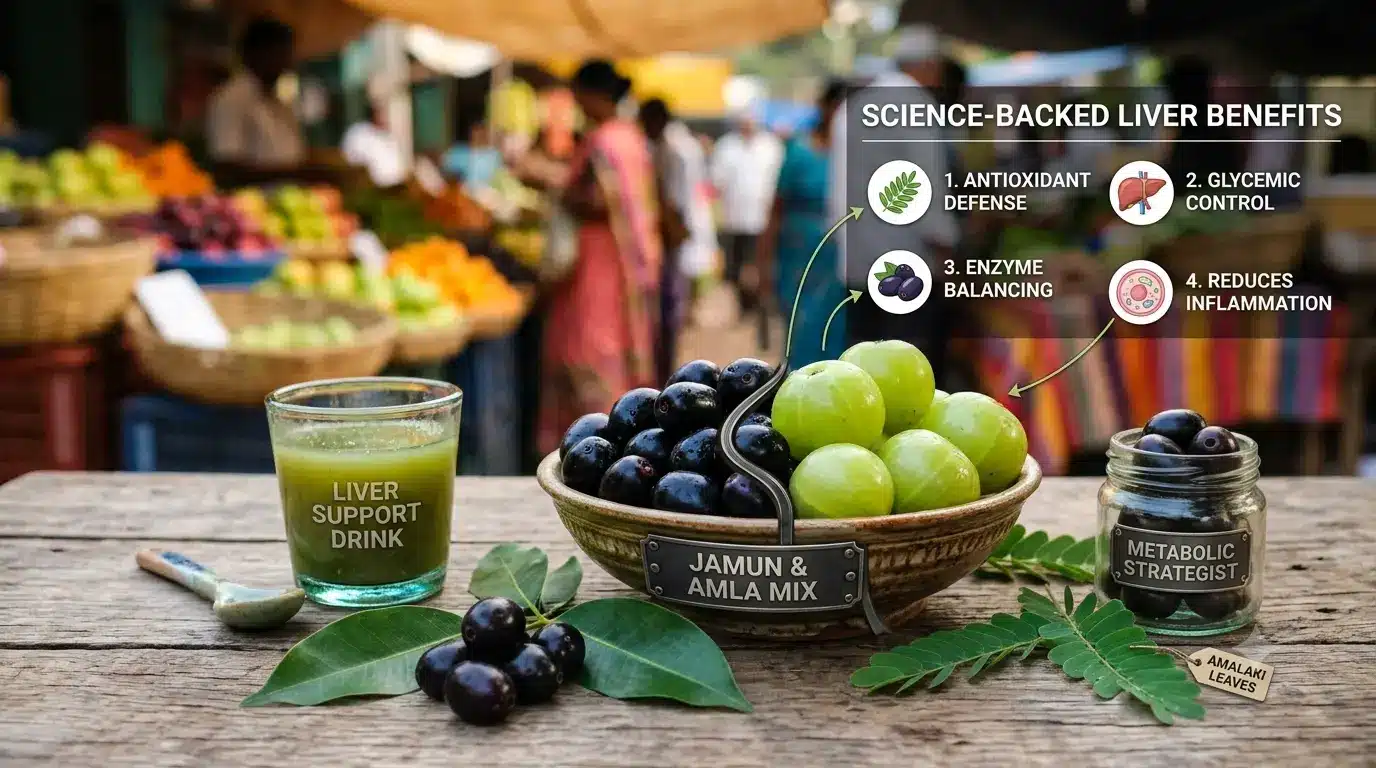
The Indian Summer Cure? What Science Actually Says About Amla, Jamun, and Fatty Liver
With Non-Alcoholic Fatty Liver Disease (NAFLD) quietly turning into a massive health crisis across India, it’s completely natural that people are looking toward the local market for answers. When summer rolls around, two fruits dominate the conversation: Amla (Amalaki) and Jamun.
But can these seasonal staples actually “cure” a fatty liver?
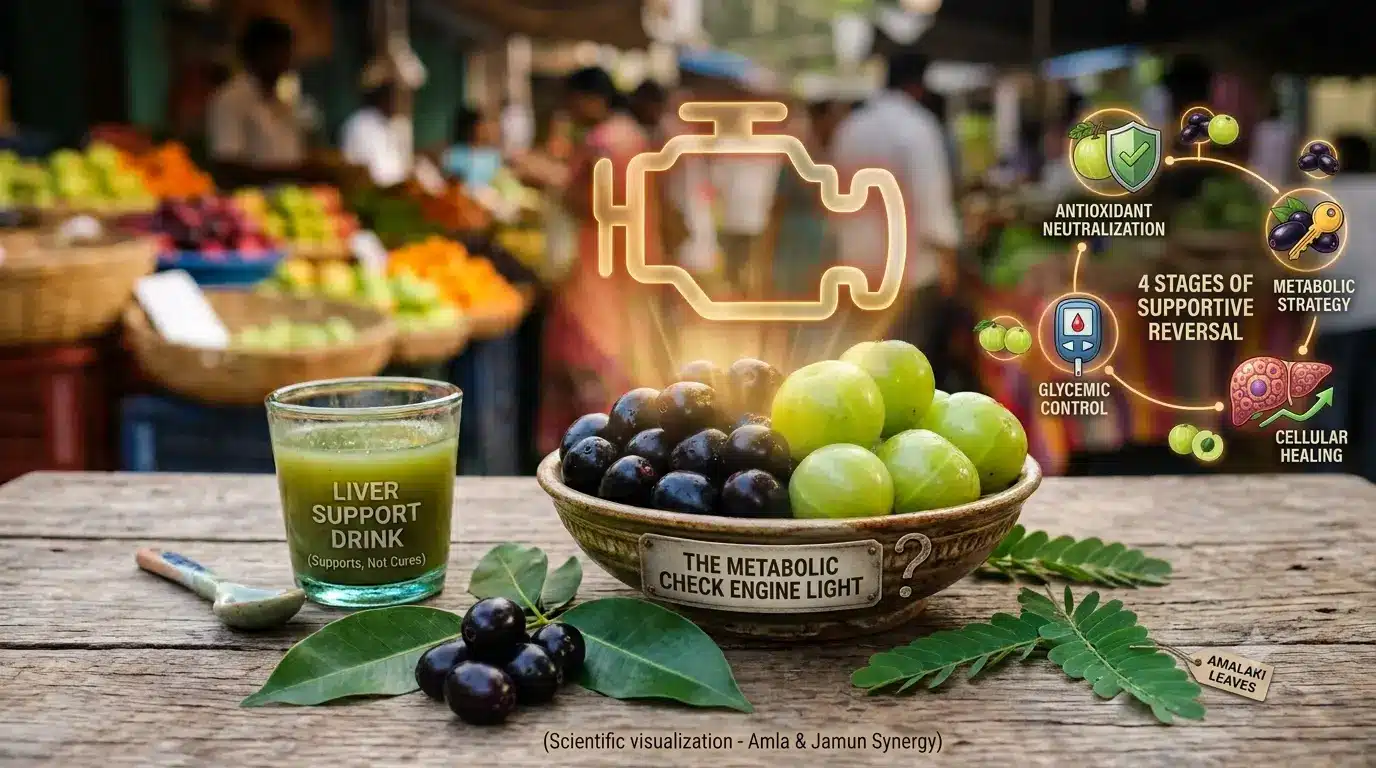
The short answer is no—there is no single fruit or pill that can magically melt away liver fat overnight. However, if you’ve been told you have Grade 1 fatty liver, think of it as a metabolic “check engine light.” Your body is signaling that it’s struggling to process fats and sugars. While Amla and Jamun aren’t overnight cures, modern nutritional science shows they are incredible allies when you use them together.
Here is how they actually work inside your body.
The Tag-Team: How They Support Your Liver
Instead of pitting these two fruits against each other, it helps to understand that they play entirely different, complementary roles.
- Amla is your shield. Grade 1 fatty liver causes chronic, quiet inflammation in your liver cells, driven by oxidative stress. Because Amla is absolutely loaded with Vitamin C and natural polyphenols, it acts as a heavy-duty antioxidant. It steps in to neutralize that stress, protecting your liver cells from damage and helping the organ process fats more fluidly.
- Jamun is your strategist. The real villain behind most fatty liver cases isn’t just dietary fat; it’s insulin resistance. When your body can’t manage blood sugar properly, those excess sugars get converted and stored directly inside your liver. Jamun has a remarkably low glycemic index and helps improve glucose tolerance. By keeping your blood sugar steady, it cuts off the supply line that creates liver fat in the first place. On top of that, studies show Jamun can actually help bring down elevated liver enzymes like ALT and AST.
Making It Work In Real Life
You don’t need to overdo it to get the benefits. In fact, consistency is far more important than quantity.
A simple, daily habit is all it takes: a small handful of fresh jamuns (about 5 to 7) or a single shot of diluted, fresh amla juice. Having them in the morning or early afternoon gives your body the best window to process and absorb the nutrients.
The Hard Truth About Reversing Fatty Liver
Here is the honest reality check: you cannot out-eat a sedentary lifestyle or a bad diet with superfoods. Downing amla juice while continuing to eat processed sugars, refined carbs, or maintaining a sedentary routine won’t yield results.
Reversing Grade 1 fatty liver requires a complete lifestyle shift. The fruits are there to support the heavy lifting, which involves regular physical movement, focusing on lean proteins and fiber-rich whole grains, and cutting back on sugar.
Because the liver is incredibly resilient, Grade 1 is highly reversible—but it requires evidence-based tracking. Use these summer superfoods as part of your daily routine, but make sure you’re working alongside a gastroenterologist or hepatologist to keep an eye on your progress.
Disclaimer: This article is for informational purposes only and should not replace professional medical advice, diagnosis, or treatment.
